From idea to MVP: Minimizing risks in an AI app for content creators.
- 💬 Social media
- 📱 Mobile app
- 🚀 Startup

The challenge
- Discover and validate that the idea, product quality and AI-generated content actually meet users’ needs and expectations.
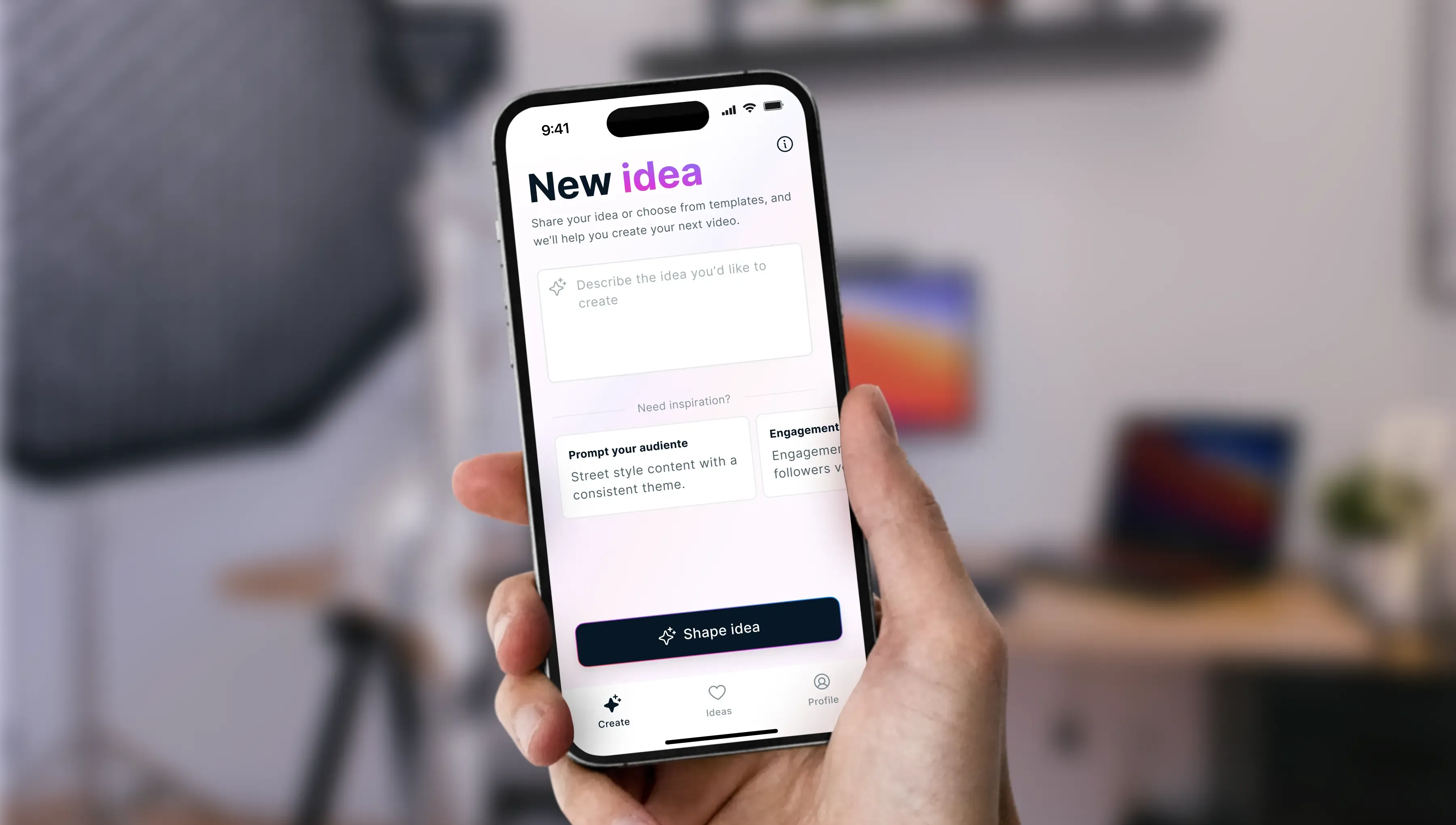
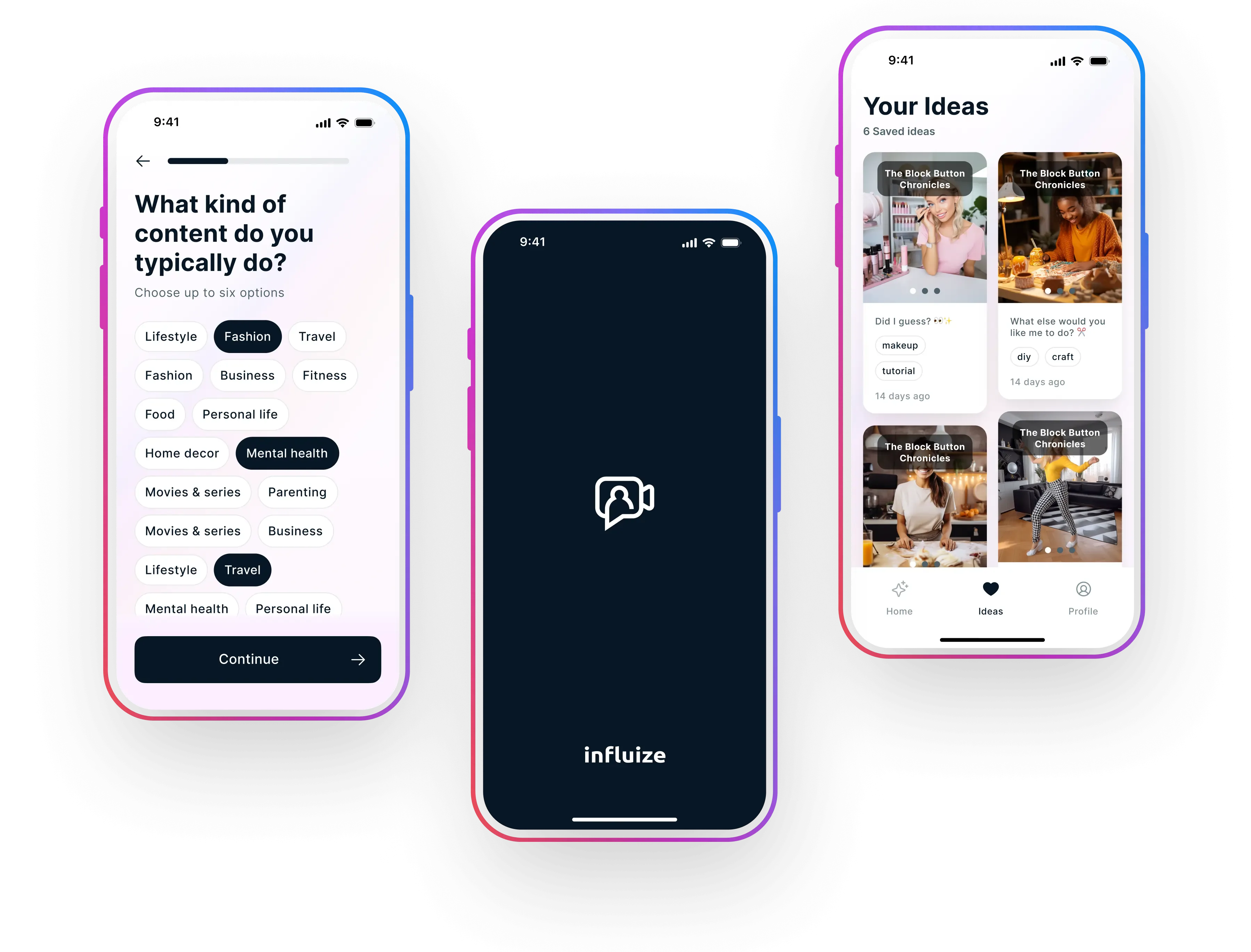
- Design and develop a personalized user experience for an AI-powered application that helps content creators generate impactful ideas.
The process
To carry out this project we followed an MVP process in which it was important to build the minimum and prove its value as soon as possible. For this, a discovery and prioritization stage was essential, which we carried out hand in hand with the client.
Discovery phase, where the value of the product is identified
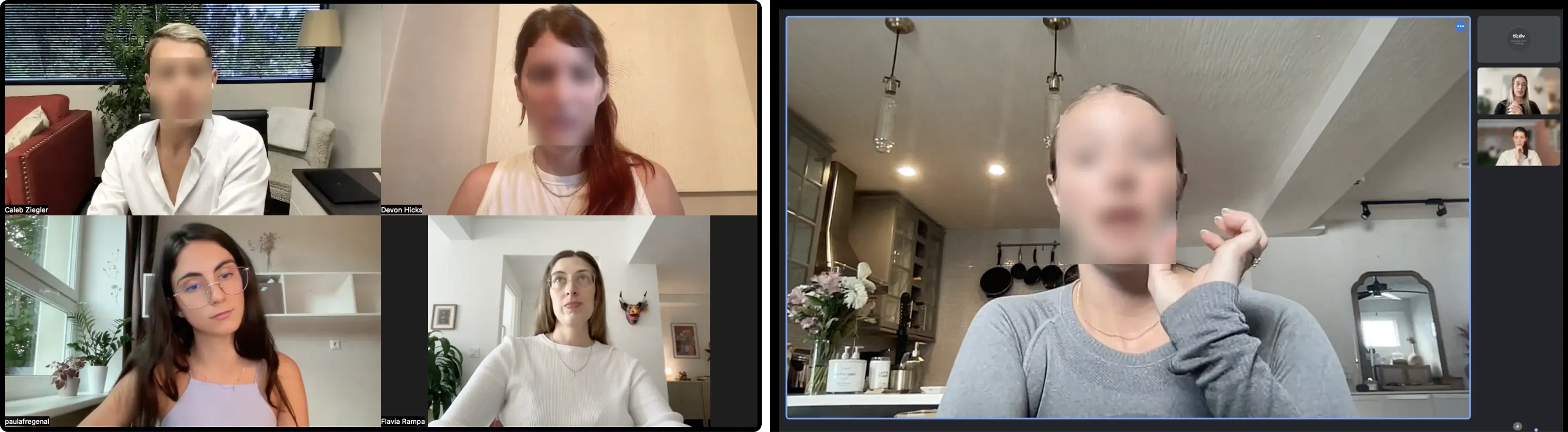
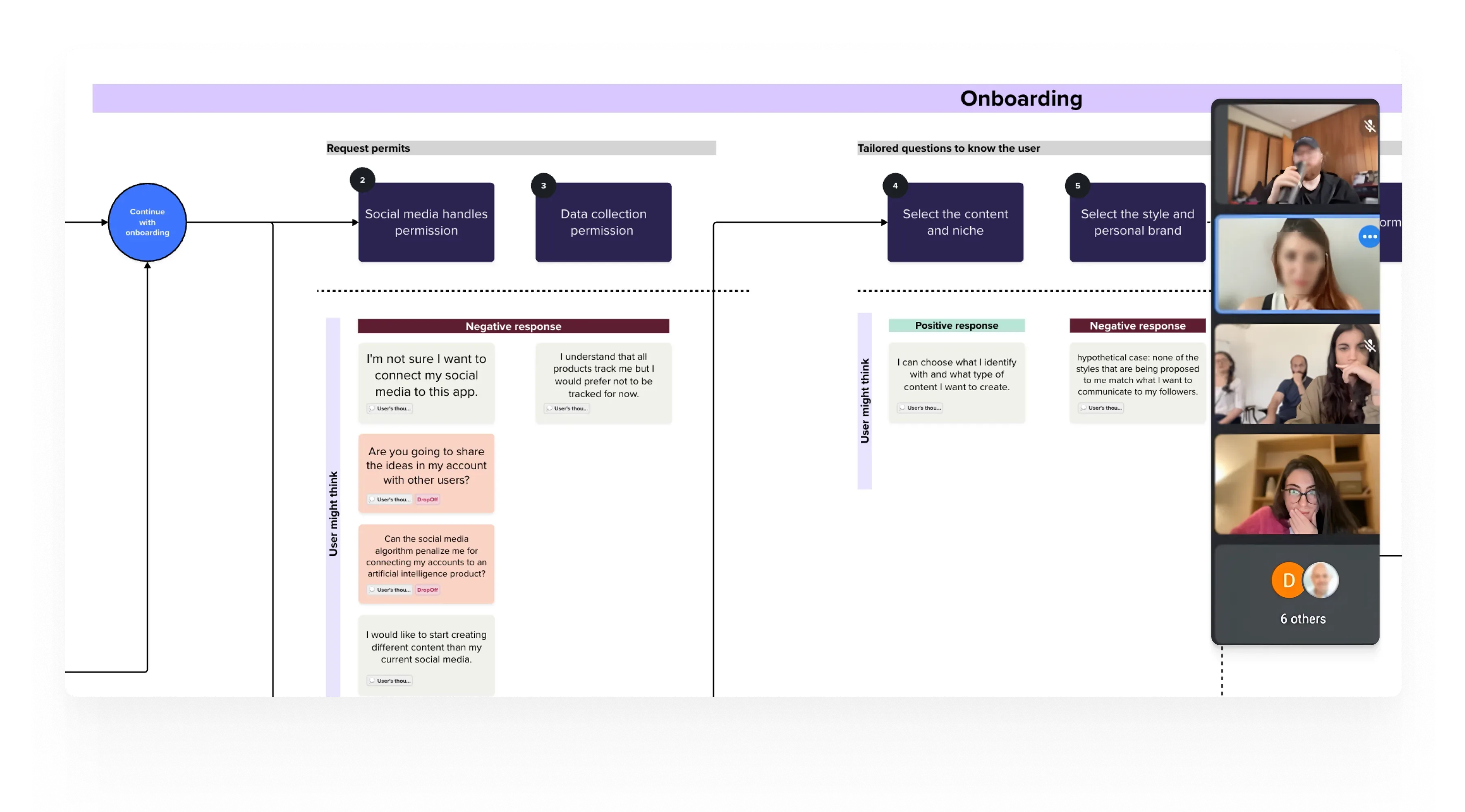
Where the design team with the support of the product team conducted a series of workshops with the client and at least 5 in-depth interviews with users. We defined the sweet spot between both groups through the user journey.
User journey workshop
After interviewing the users, we developed a step-by-step plan of the interactions that the user will have with Influize and which would be the most critical points, such as:
- The request for sensitive user information.
- The personalization and refinement of AI-generated results.
Analysis and prioritization phase
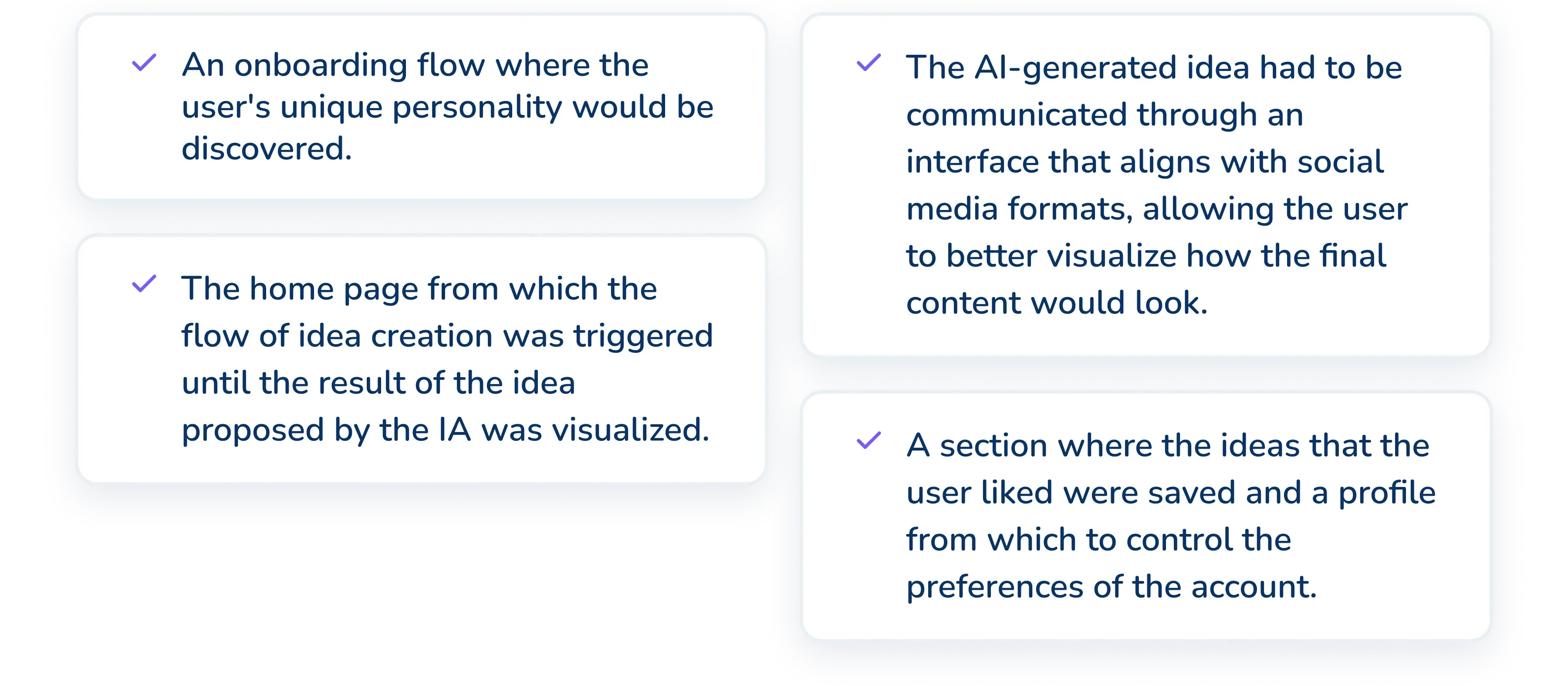
Based on the information gathered during the discovery phase, the product team together with the client defined the scope of the minimum viable product (MVP) and its objectives.
Minimum viable product
The final solution was an MVP developed in Flutter that condensed the necessary functionalities to validate the value of the product. With this scope, we proceeded to test the product with potential users.
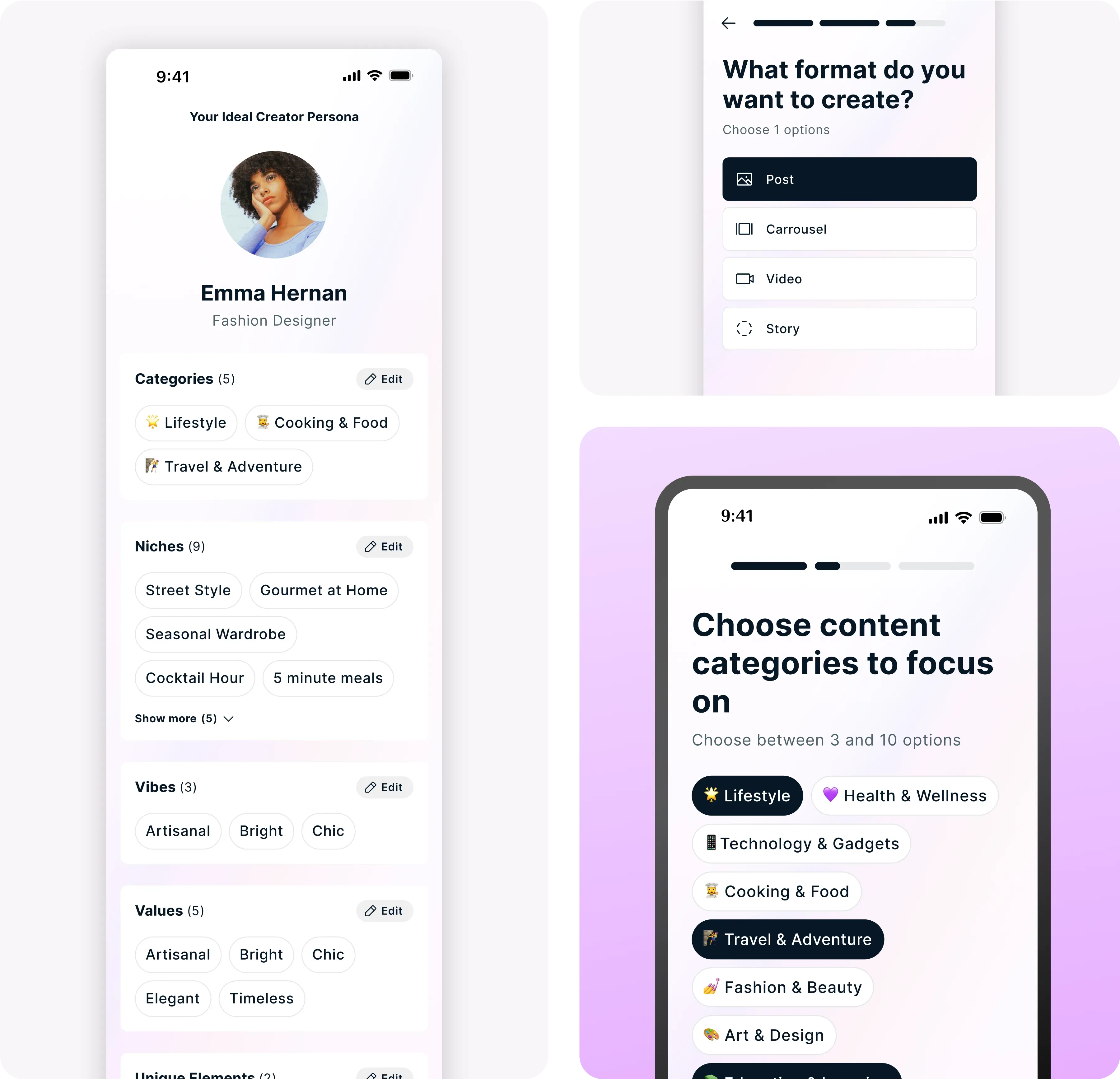
Navigating Design, Change, and AI Complexity
What follows is a look at the core challenges we encountered, and how our engineering choices supported a product-first approach throughout.
UI/UX Relevance
Whereas other projects aim to balance UX/UI design freedom and range of options versus the effort needed to implement it, for Influize the scale was clearly leaning towards prioritizing a visually compelling, on-brand interface that resonates with influencer culture. For the engineering team this meant architecting the app in a way where we could follow design output at a pixel perfect level on both platforms (iOS and Android) while still being efficient on how we spend the budget.
Change will happen
Given the innovative aspect of Influize’s idea, we had to embrace change since we knew this MVP was going to evolve. One example of this was onboarding, the question of what do we need to know about the users in order to build content that actually meets their needs and expectations was yet to be answered. For this reason we implemented a server-driven UI that would allow us to change the onboarding process to gather different information without additional coding.
LLMs novelty
While LLMS and GPTs had been around for some time when the project started (2023), the capabilities, alternatives, response time and prompting tactics were far from what we are seeing a few years later. This stressed the importance of smart prompting, asynchronous processing and modular AI integration that would allow us to lean on the benefits of AI without transferring to the user the pitfalls it could still have by then. Also acknowledging the imminent evolution of AI, hence our solution needed to be prepared to evolve with it.